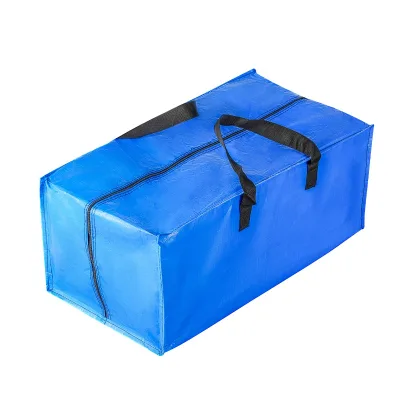
Source Foldable Waterproof Woven Bag for Moving, Shopping, and Storage
Find 30 foldable waterproof woven bag options tailored for moving, shopping, and storage needs. Compare specifications such as material, weight, and customization to select the right solution for your business requirements.
Key considerations
Products List




Comprehensive Sourcing Guide
Foldable Waterproof Woven Bag Sourcing Guide
Sourcing foldable waterproof woven bags requires a careful balance between material durability, functional design, and commercial viability. These bags are frequently utilized across diverse industries, ranging from retail and agriculture to industrial logistics and home textile applications. The core appeal lies in their ability to provide robust protection against moisture and tearing while remaining compact when not in use. Buyers must navigate a market where product attributes vary significantly, from the specific weave density to the type of closure and coating applied. Understanding these variations is essential for selecting the right supplier and ensuring the final product meets operational needs without unnecessary cost overruns.
The procurement process for these items involves verifying multiple technical specifications that directly impact performance. Key factors include the base material composition, such as polypropylene or polyester, and the presence of specific treatments like PE coating or lamination. Additionally, the structural integrity of the bag, determined by yarn count and weave density, plays a critical role in its load-bearing capacity and longevity. Buyers should approach sourcing with a clear understanding of these technical parameters, ensuring that the selected bags align with the intended usage environment, whether it involves heavy industrial loads, delicate agricultural products, or promotional retail distribution.
Product Scope and Observed Listing Signals
The market for foldable woven bags presents a wide array of product types, each tailored to specific functional requirements. Observed listings indicate a strong presence of handled bags designed for shopping, promotion, and general storage, as well as specialized variants for agriculture and industrial use. Some products are explicitly marketed as moving bags or packaging storage solutions, highlighting their portability and reusability. The diversity in application suggests that buyers should not assume a one-size-fits-all approach; instead, they must identify the specific use case, such as bedding, upholstery, or outdoor activities, to narrow down the relevant product categories effectively.
Material composition is a primary differentiator among the available options, with 100% polypropylene and polyester being the most common base materials. Polypropylene bags often feature woven techniques with densities ranging from 5x6 to 16x18, offering a balance of strength and flexibility. Polyester variants may be specified for higher durability or specific textile applications, such as linings or interlinings. The presence of features like anti-tear, anti-static, and anti-bacterial properties further refines the product scope, allowing buyers to select bags that meet specific environmental or hygiene standards. Understanding these material distinctions is crucial for aligning product selection with end-user expectations.
Technical Specifications to Verify
Verifying the waterproofing capability is a critical step in the sourcing process, as claims in this area can vary. Some products are explicitly labeled as waterproof, often achieved through PE coating or lamination processes, while others may be described as water-resistant or even not waterproof. Buyers must clarify the exact nature of the water resistance, whether it is a surface coating or a fully laminated structure, to ensure it meets the protection requirements for the intended cargo. The printing process, such as gravure printing, also impacts the bag's aesthetic and functional properties, particularly for promotional or branded applications where clarity and durability of the design are paramount.
Closure types and structural features significantly influence the usability and security of the bags. Options range from open-top designs to those equipped with zippers or handles, each offering different levels of access and containment. The weight limit and gross weight of the bags are also important specifications, with some products supporting customized weight limits to accommodate heavy loads. Additionally, the size and dimensions, which can be customized or standardized, must be verified to ensure compatibility with storage and transportation logistics. Buyers should request detailed technical datasheets that specify these parameters to avoid mismatches between product capabilities and operational needs.
Compliance and Safety Documentation
While specific certification statuses such as ISO 9001 or ISO 14001 are mentioned in some contexts, buyers should not assume that all suppliers hold these certifications without verification. It is essential to request current certification documents to confirm that the supplier adheres to recognized quality and environmental management standards. These certifications can provide assurance regarding the consistency of production processes and the supplier's commitment to sustainable practices, which may be a requirement for certain corporate procurement policies or regulatory environments.
Safety and material compliance are also critical, particularly for bags intended for food, textile, or consumer goods applications. Buyers should inquire about the safety of the materials used, including the adhesives and coatings involved in the lamination or PE coating processes. Ensuring that the materials are free from harmful substances and meet relevant safety standards is vital for protecting end-users and maintaining brand reputation. Documentation such as material safety data sheets (MSDS) or compliance certificates should be obtained and reviewed to verify that the products meet the necessary regulatory requirements for the target market.
Cost Drivers and Commercial Terms
The cost of foldable waterproof woven bags is influenced by several factors, including material type, weave density, and customization requirements. Products with higher yarn counts, such as 700D-1500D, or those featuring complex printing and lamination processes tend to be more expensive. Customization options, such as specific sizes, colors, or branding, can also impact the unit price, as they often require additional setup costs and longer production times. Buyers should analyze the total cost of ownership, considering not just the unit price but also the durability and reusability of the bags, which can reduce long-term procurement expenses.
Commercial terms and payment structures are another key consideration in the sourcing process. Typical payment terms may include a deposit followed by the balance upon completion, such as a 30% deposit and 70% balance before shipment. Minimum order quantities (MOQs) can vary widely, from small batches for sampling to large volumes for bulk orders, affecting the overall cost efficiency. Buyers should negotiate terms that align with their cash flow and inventory management strategies, while also considering the supplier's lead times and production capacity to ensure timely delivery.
Supplier Qualification and Quality Control
Evaluating supplier qualifications is essential to ensure reliable and consistent product quality. Buyers should assess the supplier's production capabilities, including their equipment for weaving, printing, and lamination, as well as their experience in manufacturing similar products. The ability to offer OEM and ODM services indicates a level of flexibility and customization capability, which can be beneficial for brands seeking unique product designs. Additionally, verifying the supplier's location and logistics infrastructure can help in assessing the efficiency of shipping and the potential for supply chain disruptions.
Quality control measures should be clearly defined and agreed upon before placing orders. This includes establishing inspection criteria for material quality, print accuracy, and structural integrity. Buyers may request pre-shipment inspections or third-party quality audits to verify that the products meet the specified standards. Implementing a robust quality control process helps in identifying and addressing potential issues early, reducing the risk of receiving defective goods and ensuring that the final products meet the expected performance and aesthetic standards.
Long-Term Procurement Checks
Establishing long-term relationships with suppliers requires ongoing monitoring and evaluation of performance metrics. Buyers should track key indicators such as on-time delivery rates, product defect rates, and responsiveness to issues or changes in requirements. Regular communication and feedback loops can help in maintaining high standards and fostering a collaborative partnership. Additionally, staying informed about market trends and technological advancements in woven bag manufacturing can provide opportunities for innovation and cost optimization in future procurement cycles.
Sustainability and ethical sourcing practices are increasingly important in long-term procurement strategies. Buyers should consider the environmental impact of the materials and production processes, seeking suppliers who demonstrate a commitment to sustainable practices. This may include the use of recycled materials, energy-efficient production methods, or waste reduction initiatives. By prioritizing sustainability, buyers can not only mitigate environmental risks but also enhance their brand image and meet the growing demand for eco-friendly products from consumers and stakeholders.
FAQs
What materials are used for foldable waterproof woven bags?
These bags are commonly made from 100% Polypropylene or Polyester. Some variants feature PE coating for enhanced durability. The material choice depends on specific application needs like agriculture or industrial use.
Can I customize the size and printing of these bags?
Yes, customization is available for size, pattern, and printing. The printing process often involves gravure techniques. Buyers can request specific dimensions or plain patterns to match their branding requirements.
What is the minimum order quantity for these woven bags?
The minimum order quantity varies by supplier but can start as low as 100 pieces. Some vendors may accept orders starting from just one unit. Buyers should verify specific MOQs with potential manufacturers.
Are these bags suitable for heavy-duty industrial applications?
Yes, they are designed for industrial, agricultural, and garment processing uses. The material offers anti-tear and anti-pull features. They can handle various weights depending on the specific density and construction chosen.
How are these bags packaged for shipping and storage?
Standard packaging typically includes OPP bags and cartons. Some items are packed individually in OPP bags. This ensures protection during transit and storage while maintaining the product's integrity.
What is the typical weight range for these woven bags?
The weight generally ranges from 50gsm to 280gsm depending on the density. Gross weight per unit is often between 0.1 and 0.2 kg. Specific weight depends on the yarn count and fabric construction.
Do these bags offer waterproof protection for contents?
Some models are explicitly waterproof, while others are not. Features like PE coating or specific weaving techniques provide water resistance. Buyers must check specific product attributes to confirm waterproof capabilities.
Where are these woven bags typically manufactured?
Many products originate from Shanghai or other regions in China. Suppliers often list their place of origin as SHN or China. This location influences lead times and shipping logistics for international buyers.